Confirmed: F1 adopts turbocharged V8 engines for 2030 and limits customers per manufacturer
The FIA and manufacturers have unanimously agreed on the return to 2.1-litre turbocharged V8 engines in 2030. Furthermore, each brand will be restricted to supplying only its works team and one customer, reshaping the grid.
 Carnonymous · 4 min de lectura · rumor abierto el 23 nov, 10:43
Confirmed. The agreement is unanimous among manufacturers and regulators, pending only formal ratification by the World Motor Sport Council in December.
Why it matters
This change aims to correct the excessive electrical dependency of the current hybrid era, prioritising the performance of the thermal engine to improve competition. For teams like Mercedes, which currently supplies McLaren, Alpine and Williams, this forces them to choose only one future customer, generating uncertainty about the fate of the remaining teams. The measure also aims to reduce costs and simplify technology, aligning with a more traditional but evolved vision of the sport.
Technical regulations: V8 turbo and less electrification
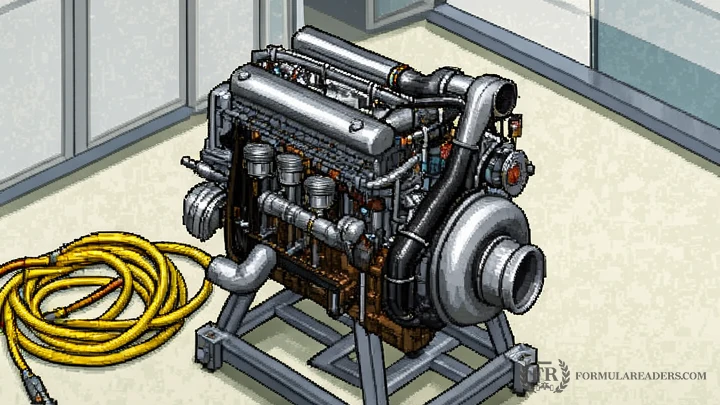
The use of 2.1-litre turbocharged V8 engines is confirmed from 2030. Electrical power will be significantly reduced compared to the current 50/50 split, dropping to a maximum of 200 kW (approx. 15% of the total in normal racing), though it will retain high peaks for qualifying. A 100 kW 'push-to-pass' function is included to aid overtaking. Media highlight that this simplification aims to return focus to the driver and the thermal engine, eliminating the extreme energy management that has characterised the 2026 season.
 The consequences of F1's early V8 engine switchYouTube: The Race
 An alternative framework for F1's V8 futureThe Race
 F1 plans to limit engine supply to customers in 2030Grande Prêmio
 F1 2030: one customer team per manufacturer and ban on wind tunnels until 2028Motorsport.com Italia
- F1 plans to limit manufacturers to two teams in 2030Motorsport.com Brasil
Customer limit: End to multiple supply
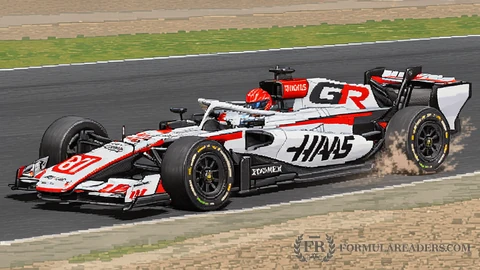
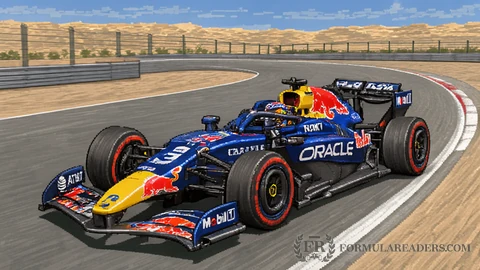
Each manufacturer will only be able to supply engines to its official team and to a single customer. This directly affects Mercedes, which currently powers McLaren, Alpine and Williams; it must choose whom to continue with. Ferrari keeps Haas (and Cadillac will have its own engine), while Red Bull already meets the limit with Racing Bulls. The measure aims to reduce the political influence of the major manufacturers in the paddock and will be voted on at the World Motor Sport Council in December.
- Ferrari leaves Vasseur to manage crisis between Hamilton and Leclerc; McLaren calls for caution with the regulations and F1 prepares V8 engines for 2030Grande Prêmio
- F1 plans to limit engine supply to customers in 2030Grande Prêmio
 The other change in Formula 1 with the V8s that could level the gridMarca F1
- F1 2030: one customer team per manufacturer and ban on wind tunnels until 2028Motorsport.com Italia
- F1 plans to limit manufacturers to two teams in 2030Motorsport.com Brasil
Economic impact and calendar
The budget for engine development will be frozen in 2028 for current units, and bank testing with the new V8s will be prohibited until that date, allowing resources to be concentrated. The spending cap will gradually decrease from $190 million to $160 million in 2034. Cadillac has already cancelled its V6 engine development to focus directly on the 2030 V8.
- F1 plans to limit engine supply to customers in 2030Grande Prêmio
 Cadillac halts V6 development for V8 in 2030auto sport web
- F1 2030: one customer team per manufacturer and ban on wind tunnels until 2028Motorsport.com Italia
- F1 plans to limit manufacturers to two teams in 2030Motorsport.com Brasil
Our reading
The confirmation is solid, backed unanimously by the FIA, FOM and the six manufacturers involved. The most credible version is that this is an urgent technical correction following criticism of the energy management in 2026, not merely an aesthetic decision. What remains to be clarified is which teams will lose Mercedes' supply (Alpine or Williams) and how this will affect their future contracts. The vote in Shanghai will be the final formal procedure before engine supplier moves truly begin.
Formula Readers analysis on the weight of the sources. It is not confirmed data.