F1 speeds up towards V8s in 2030: the technical and political debate after Las Vegas
The FIA and F1 have reached a unanimous agreement to introduce turbo V8 engines in 2030, anticipating the change. The pact includes limits on customers per manufacturer and budget cuts, while drivers such as Verstappen criticise the gradual transition.
 Carnonymous · 3 min de lectura · rumor abierto el 23 nov, 10:43
Nothing confirmed. This is what we are hearing from unofficial and entirely unverified sources.
Technical agreement: V8 turbo and power limits
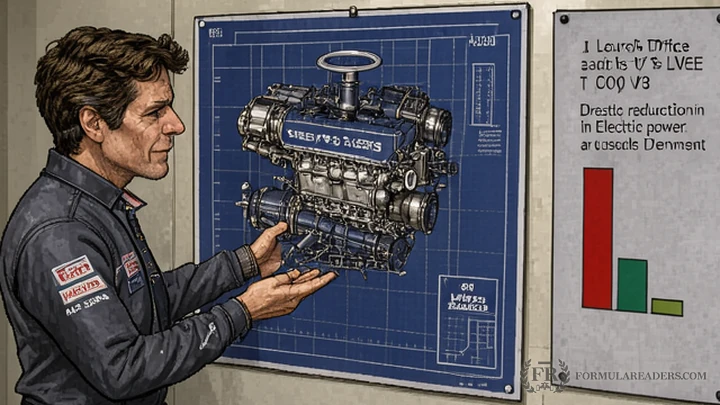
Adoption of 2.1-litre turbo V8 engines confirmed for 2030, reducing electrical dependency to a maximum of 200 kW (100 kW free + 100 kW push-to-pass). Media such as Motorsport.com and Formel1.de highlight that this simplification aims to correct the artificial overtaking issues seen in Las Vegas. Although the turbo is retained due to Audi’s pressure, electric power is significantly reduced compared to the current 50/50 split.
 Why the new V8 engines in Formula 1 could be very differentMotorsport.com Latinoamérica
 Lando Norris: after the "action" in Las Vegas, there will be something betterNemzeti Sport Forma-1
 An alternative framework for F1's V8 futureThe Race
 Vowles validates the return to V8 engines '100%'Nextgen-Auto
 Stella warns about V8 expectations: It won’t be like beforeFormel1.de
- Stella warns about V8 expectations: 'It won't be like before'Motorsport-Total
- Stella warns against false expectations for the return of the V8 in F1Motorsport-Total
 F1 plans to limit engine supply to customers in 2030Grande Prêmio
- The positive aspect of the current regulations: we will see it in 3.5 yearsFormel1.de
- The positive aspect of the current regulations: we will see it in 3.5 yearsMotorsport-Total
 Cadillac halts V6 development for V8 in 2030auto sport web
 The other change in Formula 1 with the V8s that could level the gridMarca F1
 F1 2030: one customer team per manufacturer and ban on wind tunnels until 2028Motorsport.com Italia
- Andrea Stella warns against knee-jerk reaction as Las Vegas reshapes 2030 debateMotorsport.com
 Verstappen lacks confidence in engine adjustments: "It's just a small push"F1Maximaal
- F1 plans to limit manufacturers to two teams in 2030Motorsport.com Brasil
Political revolution: One customer per manufacturer
The FIA and manufacturers agreed to limit supply to one customer team per official brand (two in total). This critically affects Mercedes, which currently supplies McLaren, Williams and Alpine. According to Motorsport.com Brazil and Marca, two of these teams will need to seek a new supplier if the rule is approved in Shanghai. The aim is to reduce the political influence of major manufacturers and balance the grid.
- F1 plans to limit engine supply to customers in 2030Grande Prêmio
- The other change in Formula 1 with the V8s that could level the gridMarca F1
- F1 2030: one customer team per manufacturer and ban on wind tunnels until 2028Motorsport.com Italia
- F1 plans to limit manufacturers to two teams in 2030Motorsport.com Brasil
Budget and development: Freezing until 2028
An engine budget is set, dropping from $190M to $160M between 2030 and 2034. Additionally, testing the new V8s on a bench is prohibited until 2028 to allow simultaneous development of chassis and engine. Cadillac cancels its V6 project to focus on the V8, while the FIA rules out an independent standard engine due to economic unviability.
- F1 plans to limit engine supply to customers in 2030Grande Prêmio
- Cadillac halts V6 development for V8 in 2030auto sport web
- F1 2030: one customer team per manufacturer and ban on wind tunnels until 2028Motorsport.com Italia
- F1 plans to limit manufacturers to two teams in 2030Motorsport.com Brasil
Our reading
The agreement is technically closed between the FIA and manufacturers, pending only ratification at the World Council. The most robust version is the limitation to one customer per supplier, confirmed by multiple sources (Motorsport.com, Marca), which will trigger a massive reconfiguration of alliances (e.g. McLaren/Williams vs Mercedes). Verstappen’s resistance suggests that interim adjustments for 2027-28 will not satisfy everyone, but the course towards 2030 appears irreversible given the current political unanimity.
Formula Readers analysis on the weight of the sources. It is not confirmed data.