F1 moves towards 2030 V8s: customer team limit and engine freeze up in the air
The FIA and Formula 1 have reached a unanimous agreement to introduce turbocharged V8 engines in 2030. The proposal includes limiting manufacturers to two teams each and freezing current power units in 2028, pending ratification.
 Carnonymous · 3 min de lectura · rumor abierto el 23 nov, 10:43

Nothing confirmed. This is what we are hearing from unofficial and entirely unverified sources.
Why it matters
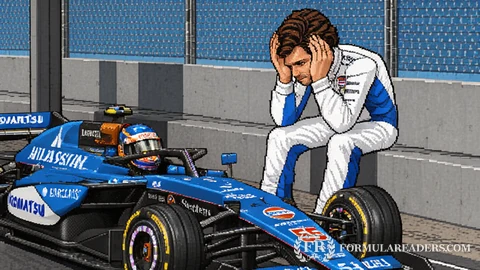
The technical regulations in force since 2026 have generated criticism due to their excessive reliance on energy management, which prompted the acceleration of the change to 2030. The proposal aims to simplify the cars and reduce costs, but directly impacts the current grid: Mercedes would have to choose between McLaren, Williams or Alpine as its sole customer, while Cadillac would abandon its V6 project to focus on the new V8.
Customer limitation and restructuring
It is proposed to restrict each manufacturer to supplying engines to only two teams (the works team and one customer). This primarily affects Mercedes, which currently supplies McLaren, Williams and Alpine. Zak Brown has confirmed that McLaren will not build its own engines for 2030, maintaining its link with the German brand, leaving the future of Alpine and Williams uncertain. The measure aims to reduce the political influence of major manufacturers and ensure economic sustainability.
 Ferrari leaves Vasseur to manage crisis between Hamilton and Leclerc; McLaren calls for caution with the regulations and F1 prepares V8 engines for 2030Grande Prêmio
- F1 plans to limit engine supply to customers in 2030Grande Prêmio
 The other change in Formula 1 with the V8s that could level the gridMarca F1
 F1 2030: one customer team per manufacturer and ban on wind tunnels until 2028Motorsport.com Italia
- F1 plans to limit manufacturers to two teams in 2030Motorsport.com Brasil
Technical and sporting reactions
Drivers show enthusiasm for the return of V8s, highlighting improved sound and an estimated weight reduction of 70 kg. Max Verstappen criticises that the gradual transition towards a thermal-electric ratio of 60-40 is insufficient, preferring 80-20. Andrea Stella warns against nostalgia, pointing out that the new V8 will be a technological evolution with hybrid innovation, not a return to the past.
- F1 drivers' opinion on the return of V8 engines in 2030Motorsport.com España
- Verstappen criticises the 60-40 balance between thermal and electric motorFormulaPassion
 Why the new V8 engines in Formula 1 could be very differentMotorsport.com Latinoamérica
 Vowles validates the return to V8 engines '100%'Nextgen-Auto
 Stella warns about V8 expectations: It won’t be like beforeFormel1.de
- Stella warns about V8 expectations: 'It won't be like before'Motorsport-Total
- Stella warns against false expectations for the return of the V8 in F1Motorsport-Total
- Stella cautions F1 against Las Vegas-inspired regulation rethinkF1i.com
- Andrea Stella warns against knee-jerk reaction as Las Vegas reshapes 2030 debateMotorsport.com
Engine freeze and push-to-pass
The package includes freezing the development of current power units in 2028 and banning dyno testing with the new V8s until that date. Additionally, a 100 kW 'push-to-pass' system is contemplated to facilitate overtaking. Technical analyses suggest this system can become a defensive tool if not managed well, as happened in Macao.
 An alternative framework for F1's V8 futureThe Race
- F1's just had a warning about a push-to-pass futureThe Race
- F1 plans to limit engine supply to customers in 2030Grande Prêmio
- F1 2030: one customer team per manufacturer and ban on wind tunnels until 2028Motorsport.com Italia
- F1 plans to limit manufacturers to two teams in 2030Motorsport.com Brasil
Our reading
The version regarding the limit of two teams per manufacturer is the most robust, backed by multiple international media outlets and implicitly confirmed by Zak Brown's statements about McLaren. However, the engine freeze in 2028 remains a sensitive point that could drastically alter the competitiveness of teams like Alpine if they fail to secure agreements in time. The unanimity among manufacturers suggests that final approval at the World Motor Sport Council is likely, but details regarding 'push-to-pass' and safeguard clauses for teams without a supplier remain grey areas.
Formula Readers analysis on the weight of the sources. It is not confirmed data.