The cost of the verbal war between Russell and Verstappen
Verstappen's victory in Las Vegas was not just sporting: it was a direct response to Russell's criticisms. The on-track collision and the Briton's final error show that, in current F1, mental superiority is worth more than pure speed.
 Formula Readers newsroom · 3 min read
Max Verstappen won the Las Vegas Grand Prix after a race marked by 35 lead changes and a direct collision with George Russell. The Dutchman, who started from pole, led 45 of the 50 laps, often ahead of the Mercedes driver.
Tension escalated from Free Practice 3, where both touched at Turn 14. Verstappen received a warning from the stewards, but Russell seized the incident to publicly accuse his rival of arrogance and acting as if he were better than everyone else.
The trap of 'yo-yo racing'
The Las Vegas circuit and the 2026 regulations created an artificial dynamic. The combination of long straights, the slipstream effect, and battery management generated a festival of overtaking that Verstappen compared to the Mario Kart video game.
Verstappen mastered this strategic uncertainty. While his rivals tried to attack and defend positions using electrical energy, he remained calm and regained the lead each time he lost it. His ability to read the race ten laps ahead was decisive.
The error that cost the podium
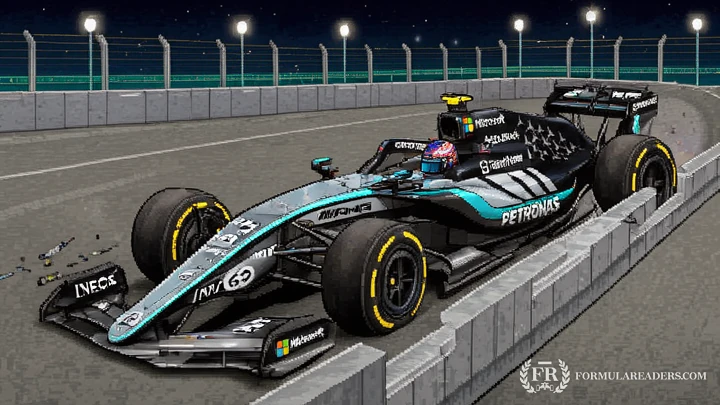
George Russell fought for the win for most of the race, but his ambition took its toll. On lap 48, he attempted to overtake his teammate Kimi Antonelli to secure second place and attack Verstappen on the final lap.
Russell locked the brakes, went off track and hit the wall. He finished ninth, scoring only two points. The incident occurred on debris from Isack Hadjar's broken front wing, but Wolff described it as a poor risk assessment by the driver.
Verstappen did not forgive. He celebrated the accident over the radio and then said Russell was 'well below his level'. The Briton admitted the error but insisted he did not regret having risked it to try and win.
Our reading
The rivalry between Verstappen and Russell has ceased to be sporting and become personal. Günther Steiner correctly warned that Russell was 'waking the bear'. By attacking Verstappen's mindset without having beaten him on track first, the Briton gave his rival the extra motivation he needed.
The result demonstrates that in current Formula 1, mental strength is as important as speed. Verstappen used Russell’s criticisms as fuel and responded with a masterful performance under pressure. Russell, for his part, showed that he remains vulnerable when tension outweighs strategy.
With two races remaining, the fight for the vice-championship is leaning towards Red Bull. Verstappen has a 40-point lead over Russell in the drivers’ standings. If Mercedes fails to calm their driver’s anxiety, they will also lose that final battle.