Teams
 Tech
 Market
 Opinion


Confirmed: F1 returns to turbocharged V8 engines in 2030 with unanimous agreement
The FIA, FOM and manufacturers have reached a technical consensus to reintroduce 2.1-litre V8 power units from 2030. This decision accelerates the end of the current hybrid era, prioritising simplification, cost reduction and a return to a more traditional sound.
 Carnonymous · 3 min de lectura · rumor abierto el 20 nov, 20:54
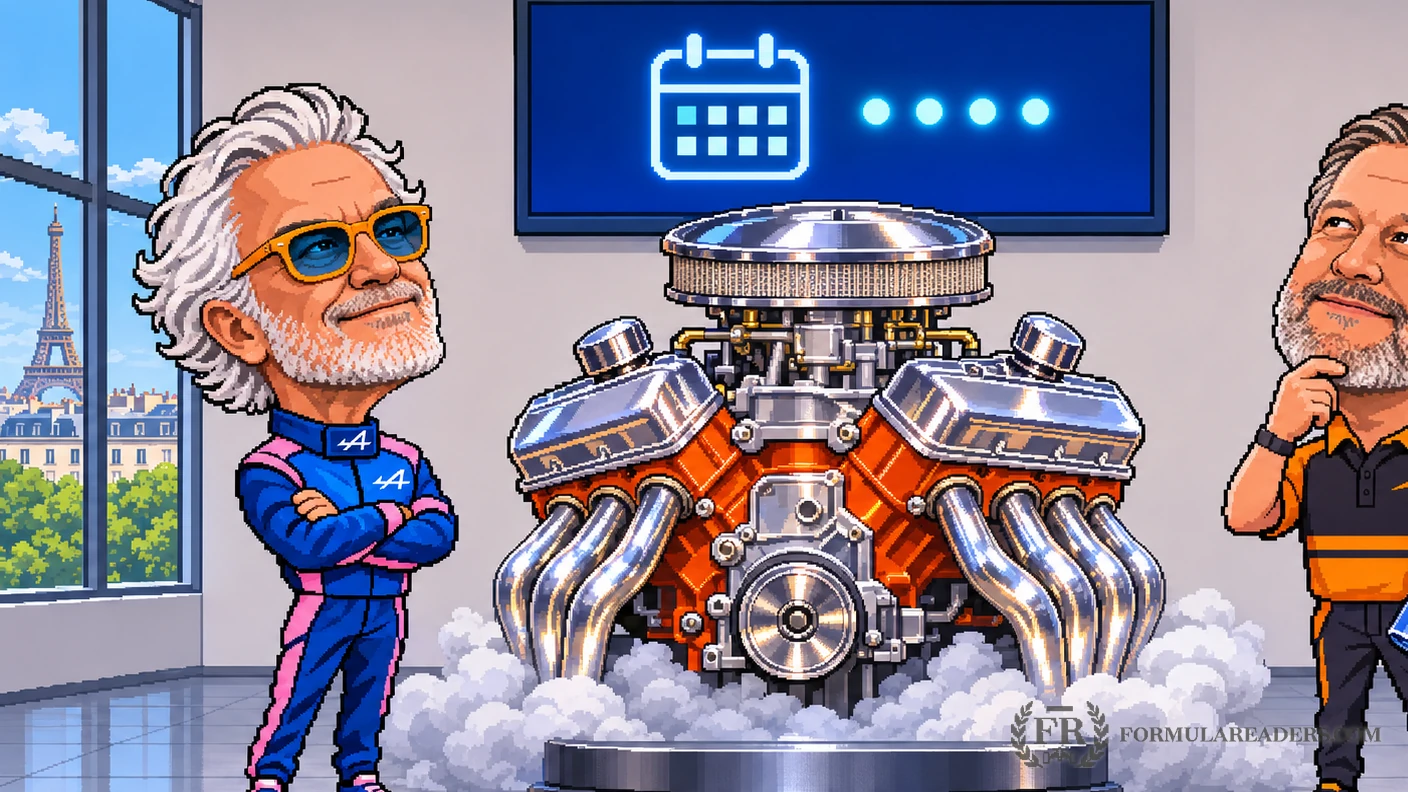
Confirmed. The FIA has officially confirmed the unanimous agreement on the technical framework for V8 engines from 2030, pending only formal ratification in December.
Why it matters
The change responds to widespread dissatisfaction with the hybrid V6 power units introduced in 2026, criticised for their energy complexity and lack of spectacle. For teams such as Cadillac, this means delaying their own engine until 2030 to avoid developing an obsolete V6. The measure seeks to align F1 with its roots ('DNA'), offering lighter and more agile cars that highlight driver skill over battery management.
Technical details: Turbocharged V8, less electric and lighter
A 2.1-litre turbocharged V8 engine using sustainable fuels will be adopted. Hybridisation is drastically reduced to 200 kW (compared to the current 350 kW), reserving half for overtaking mode. The aim is to reduce total weight by around 80 kg, simplifying the energy management that has frustrated drivers and fans under the 2026 rules.
 Cadillac delays F1 engine debut for V8 returnSpeedcafe
 FIA confirms unanimous agreement on 2030 PU frameworkFormula1.com
 F1 announces huge change as Formula E fireball ends testing – RacingNews365 ReviewRacingNews365
 F1's new V8 engine agreed – five things you need to knowThe Race
- FIA confirms major breakthrough over F1's V8 comebackF1i.com
- FIA confirms unanimous agreement for the return of V8 engines in F1 in 2030ESPN Deportes F1
- FIA makes major announcement over V8 engine returnPlanetF1
- Why F1 cannot go back to classic V8 engines and it's because of Miami and Las VegasGPFans
Driver reaction: Nostalgia and support for 'pure attack'
Drivers such as Verstappen, Russell and Hamilton support the measure due to the sound and driving freedom. Verstappen would prefer a naturally aspirated V10, but celebrates the direction. Russell highlights the need to retain some hybrid element to exceed 1000 hp, while Alonso criticises having lost nearly two decades with the current technology.
Impact on manufacturers: Cadillac delays its own engine
Cadillac (GM) postpones the debut of its own power unit from 2029 to 2030 to align with the new regulations, avoiding investing in a V6 that would only last one season. They will remain Ferrari customers until 2029. McLaren confirms it will not build its own engines and maintains its link with Mercedes.
- Cadillac delays F1 engine debut for V8 returnSpeedcafe
- F1's new V8 engine agreed – five things you need to knowThe Race
 Zak Brown on the possible return to V8s from 2030: “The FIA and F1 are doing a great job”Formu1a.uno
 Cadillac delays its own engine to 2030 to align with new V8 regulationsF1-Gate.com
- Brown gives clarity on F1's V8 engine agreement for 2030F1i.com
- F1 teams confirm “agreement in principle” on V8 return after deleted FIA posts cause confusionCrash.net F1
 Cadillac abandons its plan for an in-house engine for 2029 and targets the V8 for 2030Nextgen-Auto
- Cadillac delays its own engine to 2030 and retains Ferrari for the V8Nextgen-Auto
The political process: From deleted tweet to unanimous agreement
The FIA quickly published and deleted graphics announcing the agreement, causing confusion. Zak Brown and Flavio Briatore confirmed there was an 'agreement in principle' pending signatures. The final approval by the World Motor Sport Council in Shanghai (December) is the last formal step to ratify the technical framework.
 Russell leads in Las Vegas amid rain; V8s for 2030 and penalties for Bearman and StrollGrande Prêmio
 F1 confirms the return of V8 engines from 2030auto motor und sport Formel 1
- FIA confirms unanimous agreement for the return of V8 engines in F1 from 2030F1Maximaal
- FIA makes major announcement over V8 engine returnPlanetF1
- The FIA confirms a unanimous agreement for V8 engines and lighter cars in F1 for 2030Grande Prêmio
- Why F1 cannot go back to classic V8 engines and it's because of Miami and Las VegasGPFans
- Brown gives clarity on F1's V8 engine agreement for 2030F1i.com
- F1 teams confirm “agreement in principle” on V8 return after deleted FIA posts cause confusionCrash.net F1
- New Shock Antonelli Penalty For Vegas; Update On F1's Confusing V8 Return RevealYouTube: James' Pit Lane
Our reading
Our reading is that the agreement is solid and reflects a genuine need on the grid: drivers and teams have pushed to abandon the excessive energy management of 2026. The unanimity among manufacturers, including Cadillac's strategic adaptation, suggests that the technical consensus is far advanced beyond the political headline. All that remains is bureaucratic ratification in Shanghai; if the final details (such as exact weight or turbo mapping) do not generate new friction, the V8 is an imminent reality for 2030.
Formula Readers analysis on the weight of the sources. It is not confirmed data.