Teams
 Tech
 Market
 Opinion


Confirmed: F1 returns to turbocharged V8 engines in 2030 with unanimous agreement
The FIA, FOM, teams and manufacturers have reached technical consensus to reintroduce 2.1-litre V8 power units from 2030. This change aims to simplify mechanics, reduce costs and recover the characteristic sound.
 Carnonymous · 3 min de lectura · rumor abierto el 20 nov, 21:10
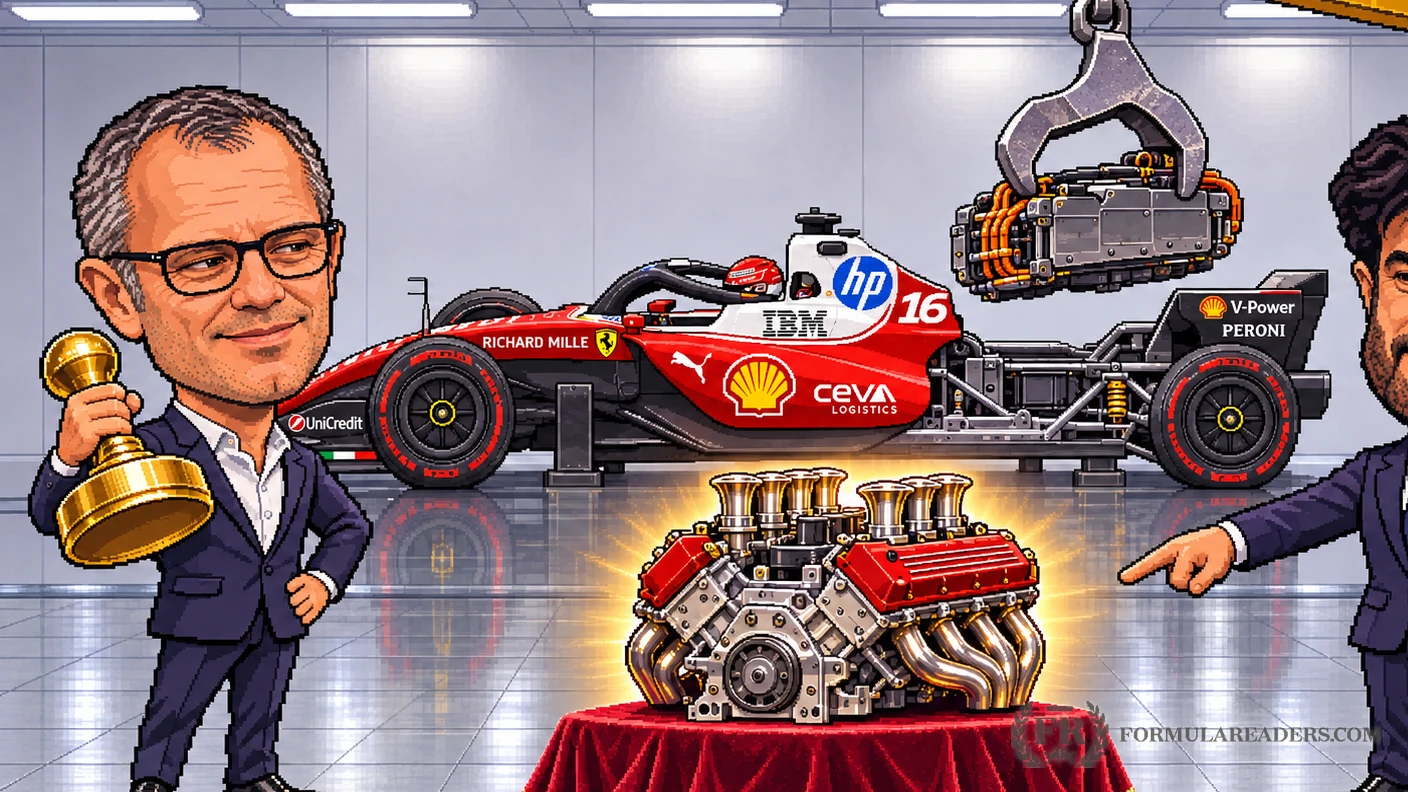
Confirmed. The FIA has officially confirmed the unanimous agreement, marking the start of the technical transition towards the turbocharged V8 era for the 2030 season.
Why it matters
The agreement accelerates the end of the current cycle of hybrid V6 engines, which has only been in force for one season and has been criticised for its energy complexity. For teams such as Cadillac/GM, this implies delaying their entry as a works manufacturer until 2030, avoiding investing in an obsolete engine for a single season. The measure responds to pressure from drivers and fans to recover pure spectacle and driver skill over excessive battery management.
Technical details: Turbocharged V8 with limited hybridisation
The approved technical framework contemplates a 2.1-litre turbocharged V8 engine, maintaining some current geometric specifications but drastically reducing complexity. The electrical part will be limited to around 200 kW (compared to the 350 kW of the MGU-K in current regulations), with half reserved for an overtaking mode. The aim is to create lighter, cheaper and simpler units, seeking to recover a sound that resonates with fans and favouring the use of sustainable fuels.
 FIA confirms unanimous agreement on 2030 PU frameworkFormula1.com
 F1 announces huge change as Formula E fireball ends testing – RacingNews365 ReviewRacingNews365
 F1's new V8 engine agreed – five things you need to knowThe Race
- FIA confirms major breakthrough over F1's V8 comebackF1i.com
- FIA confirms unanimous agreement for the return of V8 engines in F1 in 2030ESPN Deportes F1
- FIA makes major announcement over V8 engine returnPlanetF1
 FIA and manufacturers approve return of V8 engine in F1 for 2030Motorsport.com Brasil
 FIA confirms 2.1-litre turbo V8 engines for Formula 1 from 2030Motorsport.com Italia
 F1 agrees framework for switch to V8 engines from 2030, says FIAThe Straits Times F1
Impact on Cadillac and General Motors
Cadillac has restructured its plan to enter as a works manufacturer. Initially planned for 2029 with a V6 engine under current regulations, GM will delay the debut of its own unit until 2030 to coincide with the new V8s. This allows them to remain Ferrari customers for one more season and concentrate all investment on the new regulations, avoiding developing an engine they would only use for one year.
 Cadillac delays F1 engine debut for V8 returnSpeedcafe
- F1's new V8 engine agreed – five things you need to knowThe Race
 Cadillac delays its own engine to 2030 to align with new V8 regulationsF1-Gate.com
- F1 teams confirm “agreement in principle” on V8 return after deleted FIA posts cause confusionCrash.net F1
 Cadillac abandons its plan for an in-house engine for 2029 and targets the V8 for 2030Nextgen-Auto
- Cadillac delays its own engine to 2030 and retains Ferrari for the V8Nextgen-Auto
The approval process and initial confusion
The official confirmation came after days of uncertainty. The FIA quickly published and deleted graphics on social media announcing the agreement, which raised doubts about its actual status. However, team principals subsequently confirmed that a 'principled agreement' existed. The final step is formal ratification by the World Motor Sport Council (WMSC) in Shanghai next month.
- FIA confirms unanimous agreement on 2030 PU frameworkFormula1.com
- Russell leads in Las Vegas amid rain; V8s for 2030 and penalties for Bearman and StrollGrande Prêmio
 F1 confirms the return of V8 engines from 2030auto motor und sport Formel 1
- FIA confirms unanimous agreement for the return of V8 engines in F1 from 2030F1Maximaal
- FIA makes major announcement over V8 engine returnPlanetF1
- The FIA confirms a unanimous agreement for V8 engines and lighter cars in F1 for 2030Grande Prêmio
- Why F1 cannot go back to classic V8 engines and it's because of Miami and Las VegasGPFans
- Brown gives clarity on F1's V8 engine agreement for 2030F1i.com
- F1 teams confirm “agreement in principle” on V8 return after deleted FIA posts cause confusionCrash.net F1
- New Shock Antonelli Penalty For Vegas; Update On F1's Confusing V8 Return RevealYouTube: James' Pit Lane
Our reading
Our take: The consensus is solid and backed by all key stakeholders (FIA, FOM, teams and manufacturers), making a change of course unlikely before the formal vote in Shanghai. The most credible version is the technical specification detailed by media outlets such as The Race, which agree on the specifications of the 2.1-litre turbocharged V8. What is missing to close the chapter are fine details regarding the exact chassis weight and the specific management of the 'push-to-pass' mode, but the political direction is set.
Formula Readers analysis on the weight of the sources. It is not confirmed data.