Teams
 Tech
 Market
 Opinion


Denial: FIA withdraws V8 engine announcement for 2030 following lack of agreement
It was reported that the FIA had confirmed the return of turbo V8 engines for 2030, but the federation removed the statement after failing to reach full consensus with the manufacturers. Today, the agreement remains in the negotiation phase, with technical differences yet to be resolved.
 Carnonymous · 4 min read · rumour opened on 18 Nov, 21:27
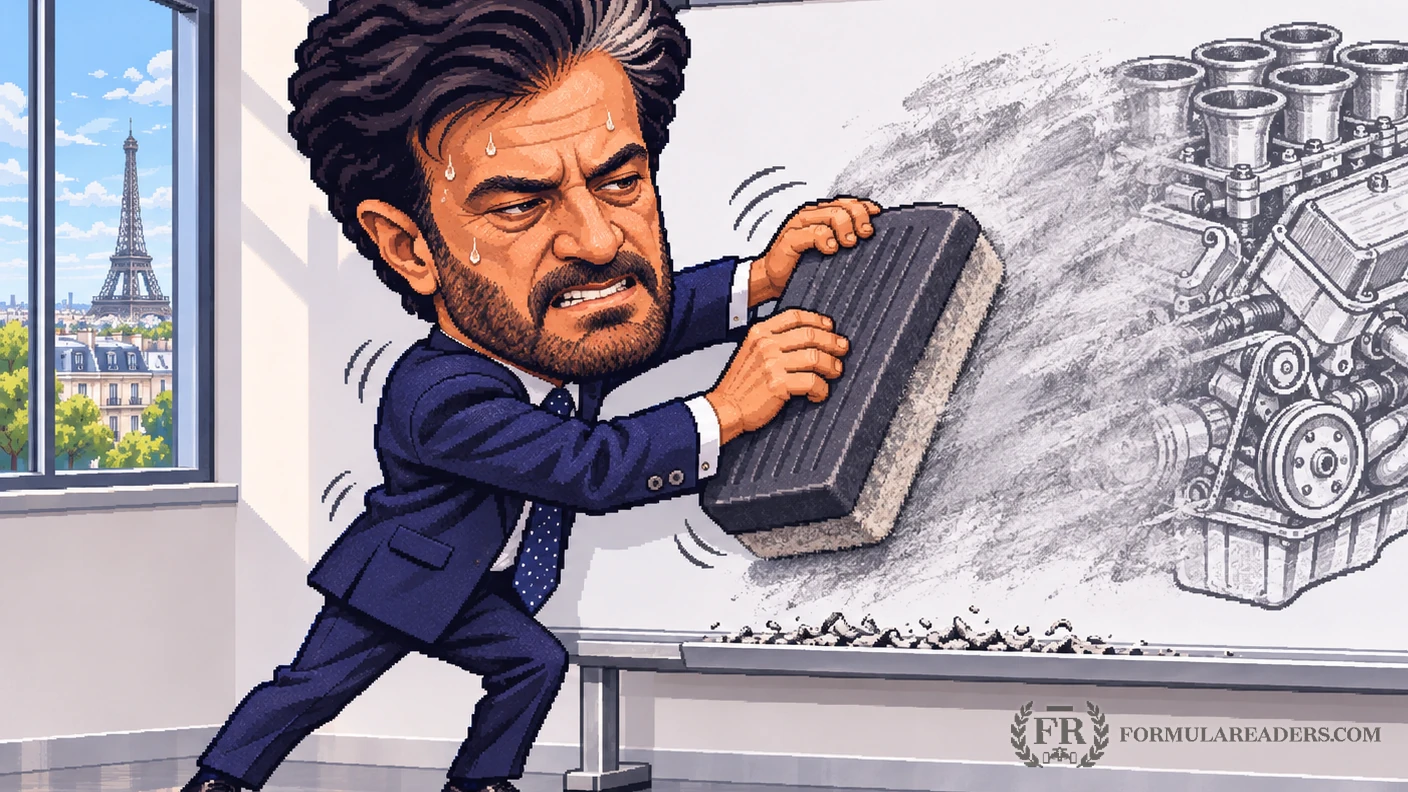
Debunked. The rumour of an immediate deal was denied by the FIA itself by withdrawing its statement, making it clear that negotiations over V8 engines for 2030 are not yet closed.
Why it matters
This regulatory change redefines the current era of hybrid engines, which have been heavily criticised by drivers such as Verstappen and Alonso. The 2026 grid operates with V6 power units that prioritise energy management, a format many consider unsustainable. A potential return to V8s would imply a weight reduction and a greater reliance on combustion, altering the race dynamics for teams such as Red Bull, Ferrari and Mercedes.
FIA withdraws announcement due to lack of consensus
According to Italian and Japanese media, the FIA published a statement confirming the deal for V8s in 2030, but removed it minutes later. The reason points to the F1 Commission not reaching a unanimous agreement, particularly regarding electrical power and forced induction. While the FIA sought simplification, manufacturers such as Audi and Honda demanded retaining a significant hybrid component to protect their technological investments. This withdrawal indicates that, although the direction is clear, the technical details remain a minefield.
 F1: FIA withdraws V8 engine announcement for 2030 after lack of agreement between constructorsMotorsport.com Italia
 Sainz cautious over withdrawal of V8 engine announcement in F1Nextgen-Auto
- Drivers celebrate possible return of V8s in F1 for 2030 following fleeting FIA announcementNextgen-Auto
 FIA removes V8 engine post for F1 after meeting with manufacturersMotorsport.com Japón
- FIA removes post about V8 engines for 2030 after disagreements with Honda and AudiF1-Gate.com
Verstappen rejects the turbo and dreams of a V10
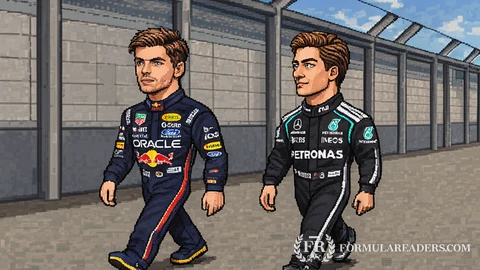
Max Verstappen, one of the strongest critics of the current regulations, backs the return of V8s but proposes eliminating the turbo and most of the electrical power. According to media from various countries, the Dutchman argues that without a turbo, fuel consumption would increase and the noise would prevent racing on street circuits. Although he admits that his preference for an atmospheric V10 is unrealistic, he considers the current plan a correct step. His position contrasts with that of drivers such as Russell, who defends maintaining hybridisation to preserve top speed.
 Max Verstappen dreams of a non-turbo V10 for the future of Formula 1Olé Fórmula 1
- Verstappen: happy with the return of the V8, but would scrap the turboMotorsport.com Italia
 Verstappen reveals his dream F1 engine – and it's not a V8F1i.com
 Max Verstappen concedes key F1 engine wish is 'unrealistic' as V8s set to returnRacingNews365
 Verstappen: "If I made the F1 rules, we would be banned from racing at some circuits"Mundo Deportivo F1
- Verstappen: "If I wrote the regulations, F1 wouldn't race at some circuits"Motorsport.com France
 Verstappen on 2030 F1 engines: V8s the right step, but he would go furtherFormel1.de
- Verstappen supports the return of V8s in 2030 but proposes more radical changesMotorsport-Total
- Verstappen on the 2030 V8s: I would prefer a naturally aspirated V10, but there would be noise and fuel consumptionFormulaPassion
 F1 drivers back return of 'very cool' V8 engines in the futureSky Sports F1
 Verstappen: If I were to set the rules, F1 would not race at certain circuitsMotorsport.com Brasil
- Verstappen criticises V8 noise and suggests they would not race on some circuits without a turboMotorsport.com España
- Verstappen: "If I were allowed to write the rules, F1 would not be permitted in certain places"Motorsport.com Latinoamérica
- Why Verstappen's ideal F1 rules would make some circuits off-limitsAutosport
- Max Verstappen: "If they let me write the rules, F1 wouldn’t be allowed in certain places"Motorsport.com
- Verstappen backs V8 return, dreams of a V10 in F1F1Maximaal
Alonso rules out being on the grid in 2030
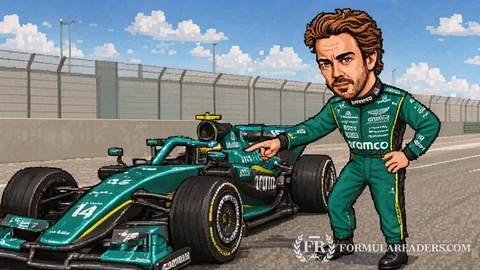
Fernando Alonso confirmed in several interviews that he will not compete in Formula 1 when the V8 engines are introduced in 2030. The Aston Martin driver described the current hybrid era as a loss of 16 or 17 years of pure racing. According to media in Spain, France and Japan, Alonso has ruled out being part of that new technical era, although he remains in F1 until at least 2027 and plans to take part in the Dakar Rally in January 2027 while still competing in the top category. After a possible definitive retirement from Formula 1, he has other disciplines in mind, such as Le Mans or the Indianapolis 500. His stance reinforces the narrative that the engine change comes too late for the veterans.
- Fernando Alonso makes retirement decision as axed F1 driver set to return – RacingNews365 ReviewRacingNews365
- Alonso rules out being in F1 in 2030 to see the return of the V8sF1Maximaal
- Alonso: "I won't be there" as V8 engines arrive in 2030Olé Fórmula 1
 Alonso rules out being on the grid if V8 engines return to F1Speedweek
- Fernando Alonso F1 V8s announcement as '16 years pure racing lost'PlanetF1
- Fernando Alonso makes F1 retirement decision ahead of looming V8 engine returnRacingNews365
- Alonso states he will retire from F1 before the return of the V8sF1-Gate.com
- Alonso laments 17 years of 'lost racing' as F1 eyes V8 returnF1i.com
- Alonso won't be in F1 with the return of V8s: "16 or 17 years lost"Motorsport.com France
- Alonso: "I won't be in F1 for the 2030 V8s"Motorsport.com Japón
- Fernando Alonso rules out staying in F1 for V8 return: “It’s frustrating”Crash.net F1
- Alonso laments 16 lost years of pure racing in F1 ahead of the V8 returnMotorsport.com Latinoamérica
- Alonso confirms he will not be in F1 for the return of V8 engines in 2030Nextgen-Auto
- Alonso laments that the V8s will not return until 2030 and states that he will not be on the gridSoyMotor
- Alonso: the return of V8s to F1 comes too late for his careerMotorsport-Total
Differences between manufacturers on electrification
Japanese and Italian media detail that the main rift between manufacturers is the scale of the electric part. Ford and Cadillac would be willing to reduce electrification and eliminate the turbo, while Audi and Honda insist on keeping a robust hybrid system to align the technology with their market strategies. The FIA, led by Ben Sulayem, prefers a simpler and cheaper solution, similar to a KERS. This divergence is the direct cause of the withdrawal of the initial announcement, and the reason the agreement remains a 'principle' rather than a confirmed fact.