



 Juan Fangio
In F1 from 1950 to 1958Five-time world champion with four different manufacturers. For many, the greatest driver of all time.
- Born
- 24 June 1911, Balcarce
- Nationality
- Argentine
- Champion with
- Maserati, Ferrari, Mercedes, Maserati, Mercedes, Alfa Romeo
- Debut
- 1950 British GP
- First win
- 1950 Monaco GP
- Last race
- 1958
Life
Born in Balcarce, province of Buenos Aires, in 1911, the son of Italian immigrants. He left school at 11 to work as a mechanic and his nickname, «el Chueco», came from his bowed legs from playing football. He became famous in Turismo Carretera racing, journeys of thousands of kilometres through South American dirt roads, and was the Argentine champion in 1940 and 1941.
Career
In 1949 he travelled to Europe with the support of the Automóvil Club Argentino and won several races. In 1950 he entered the first World Championship with Alfa Romeo, finishing runner-up, and the following year he won his first title.
In 1952 he suffered a serious accident at Monza that kept him out for almost a year. He returned stronger: he was champion in 1954 (with Maserati and then Mercedes), 1955 (Mercedes), 1956 (Ferrari) and 1957 (Maserati).
His victory at the 1957 German GP at Nürburgring is one of the greatest in history: after a slow pit stop he emerged 48 seconds behind the Ferraris and broke the lap record time and time again until he caught them and won. He retired in 1958.
Milestones
- World champion in 1951, 1954, 1955, 1956 and 1957.
- His record of five titles lasted 46 years, until Michael Schumacher in 2003.
- Won nearly half of the Grands Prix he raced, the best percentage in history.
- Winner of the 1957 German GP, considered his masterpiece.
Moments
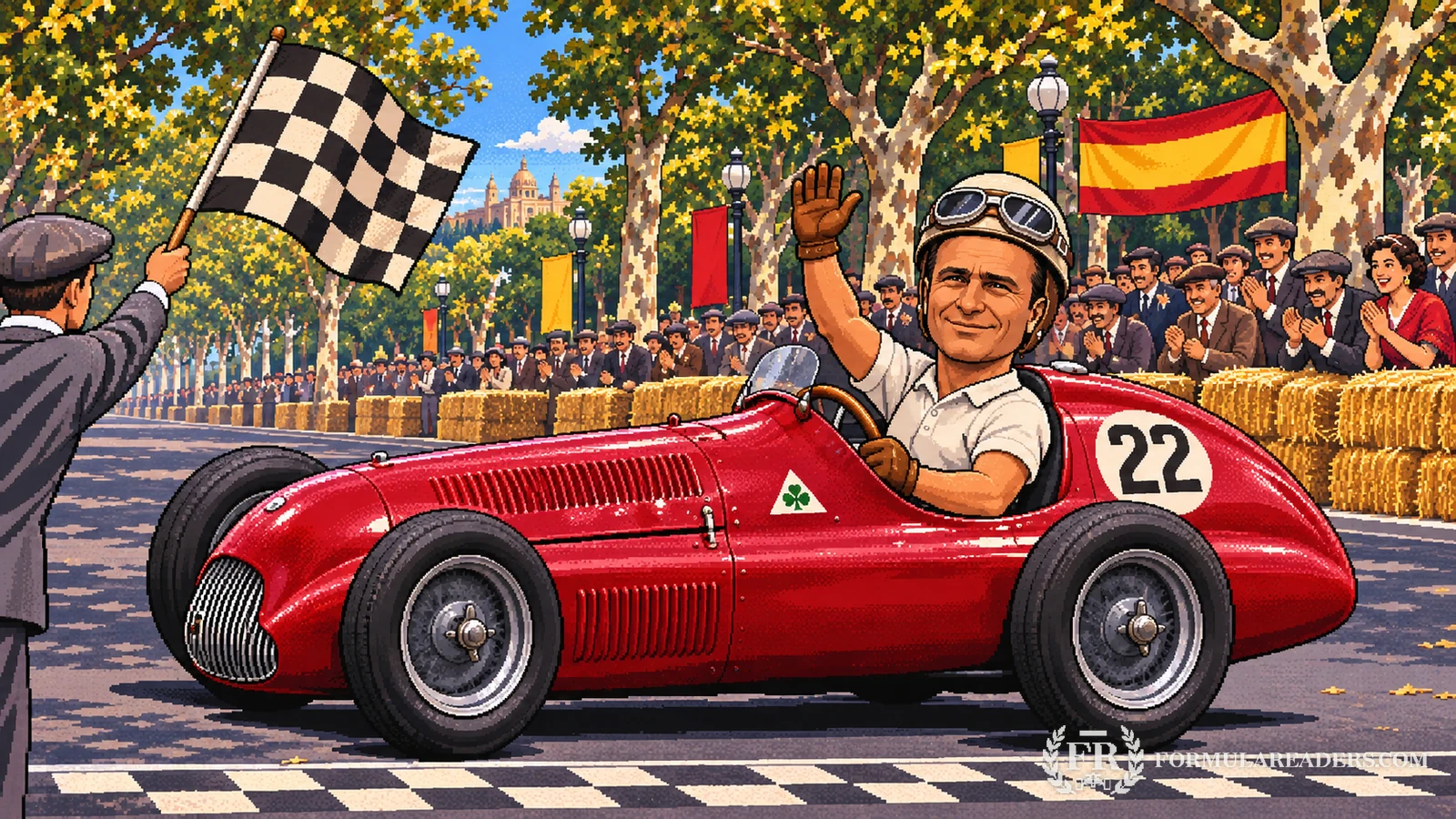
Won his first championship with the Alfa Romeo 159, at age 40.
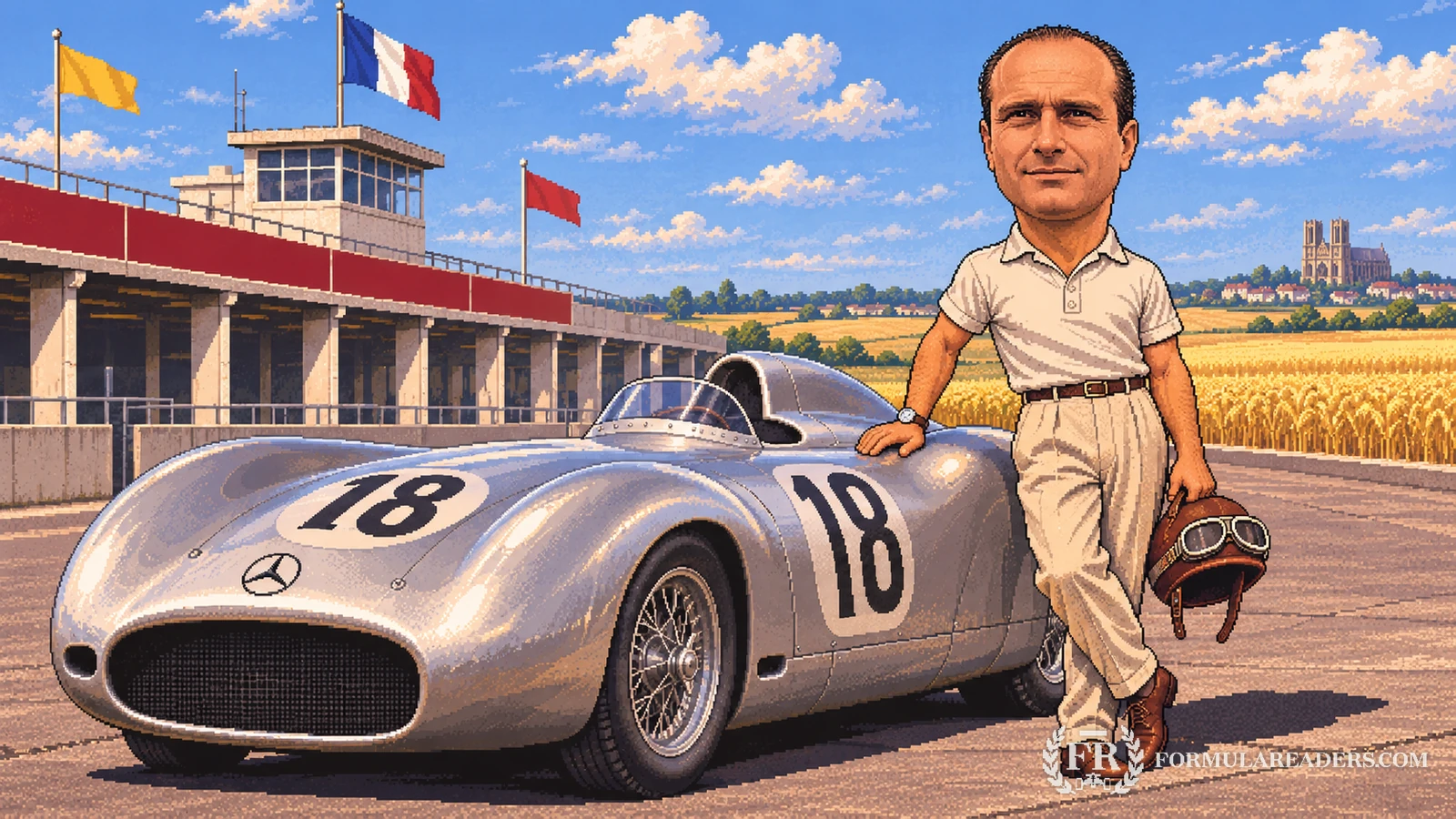
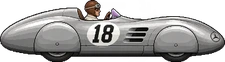
Won at Reims the debut of the Mercedes W196 with streamlined bodywork.
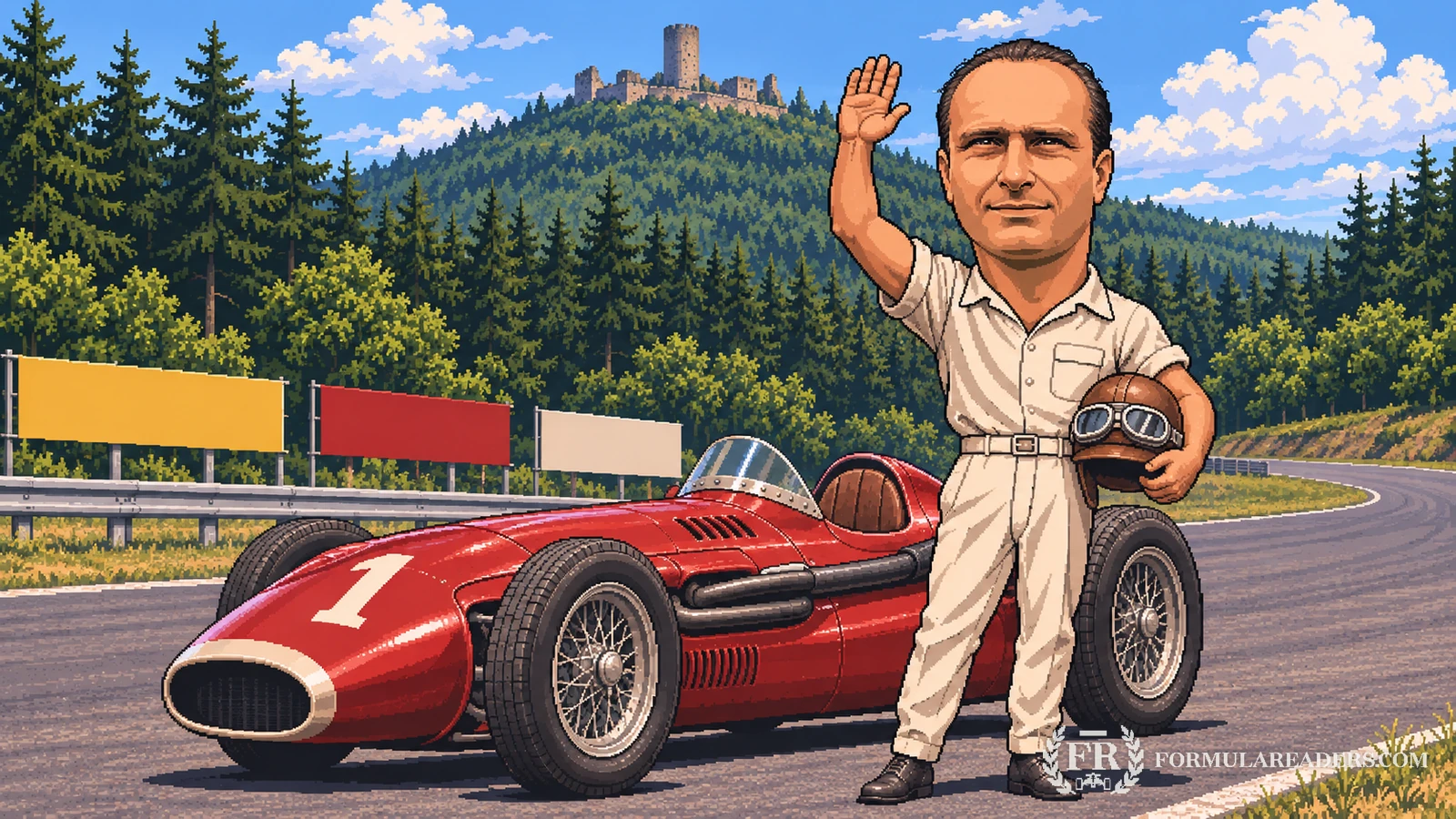
After a poor pit stop, he recovered almost a minute and won his fifth title.
Legacy
He was an honorary president of Mercedes-Benz Argentina and there is a museum named after him in Balcarce. To this day, drivers from all eras name him the greatest.
The numbers he used
- 21951, 1953–195814 races
- 11950, 1954, 1956–19575 races
- 181950, 1953–19555 races
- 101950, 1955–19564 races
- 41951, 1953–19543 races
- 261954, 19563 races
See the other 17 numbers
- 341950, 1956, 19583 races
- 61950, 19532 races
- 81951, 19552 races
- 221951, 19562 races
- 301953, 19562 races
- 321953, 19572 races
- 519531 race
- 1219531 race
- 1419501 race
- 1619541 race
- 2019561 race
- 2319531 race
- 2419511 race
- 3819511 race
- 5019531 race
- 6019501 race
- 7519511 race
Until 1973, the number was assigned by the organiser of each race, which is why it changed from one Grand Prix to another. Since 1974, it has been fixed per season.
F1 career
| Seasons | Team |
|---|---|
| 1950–1951 | Alfa Romeo |
| 1953–1954 | Maserati |
| 1954–1955 | Mercedes |
| 1956 | Ferrari |
| 1957–1958 | Maserati |
Last victory: 1957 German GP.
Before 2003 the database lacks full qualifying results: starts from first place on the grid are counted.
From the collection
Iconic cars in history


Sources and further reading
Data and statistics: Jolpica-F1 (the open continuation of Ergast) and Wikidata. Text by Formula Readers.